In my younger and more vulnerable years my father gave me some advice that I've been turning over in my mind ever since. "Whenever you feel like seeking any truth," he told me, "just remember that all the people in this world haven't had the courage that you've had."
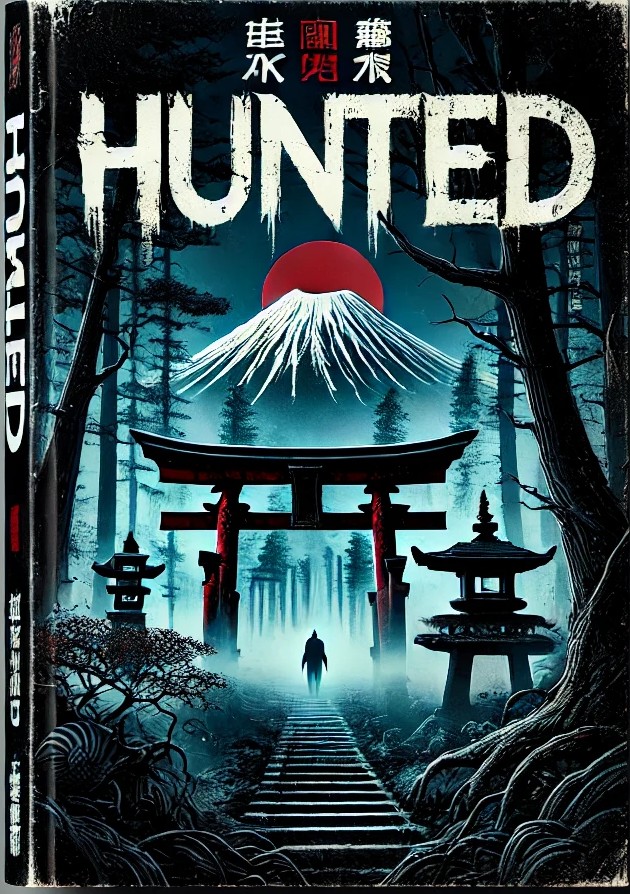
Thus, I abandoned the idea of calling my colleagues for help and embarked alone on a journey to Aokigahara—the Sea of Trees at the foot of Mount Fuji—in search of the truth. Though I might never return, I had no regrets.
By late January, Mount Fuji was still blanketed in deep snow, a pristine white carpet stretching beneath countless Japanese pines, red pines, firs, hemlocks, and Japanese oaks. As I stepped onto the main trail of Aokigahara, I barely saw another soul. A few hikers did glance at me with odd expressions—perhaps surprised to see a nearly seventy-year-old white man wandering into this place at a time when the chill still lingered in the air. I certainly didn’t look like someone who had come here to end his own life. More importantly, I didn’t look like I belonged here.
I carried a forty-liter hiking pack, with a sleeping bag strapped to the bottom and a waterproof tarp covering the top. I hadn’t packed a tent—an extra fifteen pounds was more than I cared to carry. Instead, I planned to find a hollowed-out tree for shelter or rig a makeshift bivouac with my tarp. I wore an NSAA-issued mountaineering jacket and boots—whether they were truly professional gear, I couldn’t say, but at twenty degrees Fahrenheit, I was already breaking a light sweat. A trekking pole in each hand, I had fitted them with snow baskets to keep from sinking too deep into the snow. I moved steadily along the main trail, and for the past mile or so, since I last encountered that group of hikers, I had been completely alone.
Pulling out my handheld GPS, I checked my position and the direction I needed to go. My senior, TL, had laid everything out meticulously in his notes—I knew I had to be close to the entrance of the hidden trail.
Sure enough, after another four hundred feet or so, rounding a slight bend, I saw it—the very spot TL had described. About eight feet wide, flanked by towering firs, a rusted chain stretched between the trunks. A weathered sign hung in the middle, its once-bright paint now faded and peeling, but the message was still clear, written in both Japanese and English: No Entry.
I tapped the chain lightly with my trekking pole before stepping over it. The suicide forest lay ahead. From this moment on, there was no turning back. It separated into two different worlds, one for alive, one for death.
A quick glance at my GPS showed the time—January 31, 2004, 1:20 PM. There was still a bus back to Tokyo at 4:30 in the afternoon, but I had no intention of taking it.
The landscape before me wasn’t all that different from what I’d seen along the main trail. Sunlight filtered through the branches, and the occasional breeze sent a shiver through the trees. This was volcanic terrain, riddled with ancient lava formations. Patches of dark stone jutted through the snow, their jagged edges and hollowed-out pockets giving them an almost unnatural appearance. Some bore perfect swirling patterns, as if frozen mid-motion.
Nature had a way of being unexpected. That unpredictability had always filled me with an insatiable curiosity. Life, I often thought, was nothing if not interesting.
The snow was deep, especially now that I’d veered off the main trail into the woods. It ranged from eight inches to a foot thick—not impassable, but enough to make things challenging for a man in his late sixties.
The forest was quiet. Now and then, a bird called out, or a small animal darted through the undergrowth, but beyond that, there was only the wind, whispering through the treetops. No voices. No hum of machinery. No other footsteps. Just me, alone in the vast expanse of earth and sky.
Or maybe not entirely alone. Even here, I could see traces of human presence.
A single yellow ribbon, running parallel to the path.
A final lifeline, placed there by the Japanese authorities for those who entered this forest intending to end their lives. Should they change their minds, all they had to do was follow the ribbon back to the main trail, where they could still catch the last bus to Tokyo at 4:30 PM.
I walked at an unhurried pace, regulating my breathing and syncing my steps to conserve as much energy as possible. With each step forward, I used my trekking pole to probe the ground ahead. I wasn’t expecting traps, but I hadn’t come here for a leisurely hike either.
According to TL’s notes, if I followed the trail for about four miles from the entrance, I would reach my last resupply point for the day—an old cabin, abandoned or not, I wasn’t sure. At least, when TL last explored this area six years ago, the place had still held some firewood, kerosene, tinder, and a few cans of food. A final gesture of human kindness left behind for those who might need it.
That cabin would be my shelter for the night.
When I finally saw it, I exhaled in quiet relief. It was still standing, sturdy and intact, weathered but defiant against the wind and snow. I glanced up at the sky, catching glimpses of it through the treetops. Dusk was settling in—it was around five in the afternoon. There was a good chance of snowfall tonight.
Keeping my steady rhythm, I made my way to the door. Below the window, stacked about two feet high, was a small reserve of firewood, lightly dusted with snow. I brushed some of it off with my gloved hand. These would do for a fire.
The cabin was small, roughly sixteen by twelve feet, with two windows, a fire pit, an iron hook hanging from the ceiling, and a flue. A wooden shelf was nailed to the wall, cluttered with seven or eight cans of food, two kerosene containers, and two dusty lighters. The cans were frozen solid, the kerosene was full, and the lighters were unreliable at best. In the corner, two plastic buckets sat untouched—no doubt meant for more practical uses. There was no furniture. This wasn’t an inn. It was a temporary refuge.
I shrugged off my heavy pack, propped my trekking poles by the door, and went outside to gather three or four thick logs that weren’t too damp. Starting a fire wasn’t difficult. Using my hunting knife and a stick, I split one log into five or six kindling strips, stacking them neatly in the fire pit. A small drizzle of kerosene, a flick of my windproof lighter, and in less than a minute, warm, orange flames danced through the cabin.
I stepped outside again to bring in another five or six slightly damp logs, setting them on the fire pit stones to dry. No point in waiting until later, only to find myself without dry wood when I needed it. Then, I unfastened my pack and pulled out a small pot. Scooping up some snow from outside, I hung the pot over the fire to melt it into water. A hot cup of coffee sounded good.
I had brought my own rations, but there was no need to dip into my supplies just yet. I pulled a can from the shelf and examined it—beef, fish, rice, and a single can of vegetables. After a moment’s thought, I settled on the beef. By then, the water was ready. I poured a cup of steaming hot water and prepared to heat the canned food.
That was when I heard it.
A soft knock at the cabin door.
I took a deep breath, murmuring a silent prayer, and rose to my feet.
Opening the door, I found myself face to face with a boy—thirteen or fourteen, by the looks of him. He had the appearance of an ordinary Japanese middle schooler, dressed in a navy blue school uniform and leather shoes. No hat, no sign of exhaustion from travel, no dust or wear on his clothes. He stood there as if he had just wandered in from a school festival on a mild spring afternoon.
With impeccable politeness, he spoke to me in English, his accent unmistakably Japanese.
“Sir, may I come in and have a word with you?”
I stepped aside, allowing the boy to enter the cabin, then closed the door behind him. He made himself comfortable right away, sitting cross-legged on the floor as if he had done this a hundred times before.
Reaching into my pack, I pulled out a spare cup, poured him some hot water, and handed it over.
"Kid, what's your name?"
He accepted the cup with both hands. "My name is Takahashi Kura. I'm fourteen years old. It’s a pleasure to meet you."
"Takahashi, huh? Well, I’m Herbert Strauss. Just call me Herbert—it’s easier that way." I’d heard how Japanese speakers pronounced my last name before, carefully enunciating every consonant in Str—Su-te-ra-u-su. It was exhausting.
"Mr. Herbert," Takahashi said, taking a careful sip of his drink, "it’s surprising to see anyone here this time of year. Usually, people only wander into this place by accident during the summer or fall."
"I didn’t wander in by accident." My tone was calm, deliberate. "I came looking for you, Takahashi-kun."
His hand froze for a brief moment before he set the cup down. It took him a long time—several seconds, maybe even a full minute—before he finally spoke again.
"Miskatonic University?"
"Class of ’69, paleontology. PhD in ancient religious history, 1975." I answered without hesitation. "Maybe this name will sound more familiar to you—Tommy Lee Stevenson. He was my senior. I wouldn’t have made it here without his guidance."
"Hold on…" Takahashi fell silent once more. This time, the pause stretched even longer—ten, maybe fifteen minutes—before he finally responded.
"He was… an old acquaintance of ours, from long ago."
"TL and I studied under the same professor. We were close, and we never stopped sharing knowledge, even after he moved to Japan nearly thirty years ago." I chose my words carefully. "Just a few days ago, TL passed away. One of his last wishes was for me to come here. And I don’t believe for a second that he came here to die. He genuinely believed that you—or rather, your people—had something for me. Something I wouldn’t expect."
"That’s correct. We had an agreement with TL and certain professors at Miskatonic."
I nodded.
"It seems you weren’t aware of this," Takahashi mused. "But that’s fine. Mr. Herbert, we honor our word—whether in life or in death. The matter that Mr. Stevenson entrusted to us has almost been completed. If you don’t mind, please come with me to our research facility, deeper within the Sea of Trees. We will hand over all the results to you."
"That’s exactly what I was hoping for, Takahashi-kun." I struggled to keep my excitement in check—this journey was going smoother than I had dared to expect. "Perhaps we could have a deeper conversation while we’re at it."
The firelight flickered in Takahashi’s dark brown eyes. He smiled and gave a small nod.
"Then let us begin, Mr. Herbert."
Monday, February 2, 2004
The NSAA headquarters in Dallas was still in chaos, with no one able to sit down and take a breath. Since the major leadership reshuffle on January 3rd of this year, all NSAA personnel had been struggling to adapt to the new leadership style and operational procedures—everything had changed, from funding applications to executing sterilization operations.
Jen Van Limburg didn’t like her current position at all. Compared to sitting in an office every day, reading endless reports, and making difficult decisions, she missed her days as the ESA liaison in the U.S. During that time, her friends Theresa Bellanger and Theresa’s secretary, Paul Zimmerman, had always been her sources of energy. However, after a sudden power struggle between the U.S. and Europe at the end of 2003, combined with a large-scale battle against a cult—an operation internally referred to by the NSAA as “Sterilization” —Theresa had been driven back to Europe by the conservative Americans, and her godson and secretary, Paul, had followed suit. Replacing Theresa as the administrative chief of NSAA was an American named Jefferson Morgan, while Jen was unceremoniously placed into NSAA as the deputy director in charge of European affairs and all external operations—essentially dumped there by the ESA.
Jen had thought about refusing, resigning, or requesting a transfer back to Europe. The only reason she grudgingly accepted the position was because her ESA superiors had told her: The enemies we face do not have nationalities. Jen agreed with this reasoning. She knew that the battles fought beneath the surface and the cruelty involved far exceeded what the public could imagine—Hollywood movies could make light of millennia-old conflicts between humans and gods, but as someone who knew the truth, she had no justifiable excuse to refuse the assignment.
Her internal line rang. Jen picked up the receiver absentmindedly. “Jen speaking. Go ahead.”
“Director Van Limburg, Mr. Morgan requests your presence in his office. Directors José and Taft are already here. There’s an urgent matter.” It was Fiona Gordon, Morgan’s administrative secretary.
“Understood, I’m on my way.” Jen hung up, grabbed her purse, phone, and handgun, slipped on her high heels, and left her office. Taking the elevator to the top floor, she found Fiona already standing to greet her.
“Director Van Limburg, they’re all waiting for you inside. Would you like your usual coffee?”
“Yes, please. Thank you, Fiona.” Jen nodded at her, feeling a little uneasy as she knocked on the door.
The one who opened it was her colleague, Deputy Director Joseph José, responsible for intelligence and personnel. “Jen, just in time.” He pulled a chair over for her. “Director Tsuji Otosaburo of the JSA sent us a top-priority classified message twenty minutes ago. One of our agents has gone missing in Tokyo.”
Jen crossed her long legs, frowning slightly. “Who?”
“Professor Herbert—Herbert John Strauss.”
Morgan’s voice was deep and rich, not hoarse but resonant, like that of a celebrated singer rather than a career politician.
Jen turned her gaze to Morgan.
Even in Europe, he was an exceptionally tall man—six feet six inches, weighing 220 pounds. At forty-eight, his hair was still thick and jet black. He had the quintessential American features: a square jaw, an omega-shaped chin, and a clean-shaven face. His thick, dark eyebrows arched high over deep-set eyes, their deep brown irises sharp and predatory, like a hawk tracking its prey. His nose was hooked, with narrow nostrils, and his ears slightly protruded.
Morgan’s lips were thin, almost pale, contrasting with his perfectly white and even teeth. He wore his watch on his right wrist, with the dial facing inward, and on the ring finger of his left hand, he sported a massive silver wedding band, reminiscent of a signet ring from classical British aristocracy. His shirt was immaculate, complemented by a deep blue tie, and on the left lapel of his suit, a prominent American flag pin stood out.
Morgan had served as a transport pilot in the Air Force, retiring as a lieutenant after four years before diving straight into politics. His electoral luck had been mixed—he had run for Congress in Tennessee but never managed to secure consecutive terms, always alternating between winning and losing. Eventually, he abandoned his political ambitions and joined the Defense Intelligence Agency (DIA) as a civilian officer, where he found rapid success. In just nine years, he had risen from a regional office manager to the director of the NSAA.
Morgan nodded at Jen and said, “Herbert has been missing for over forty-eight hours. His last known appearance was near the parking lot of Aokigahara, the Sea of Trees at the foot of Mount Fuji. He was seen at a convenience store there, where he bought some food and water before disappearing from our radar.”
“Director Morgan, no offense, but he as the head of our research department, why was I never informed that Professor Herbert was traveling to Japan?” Jen questioned bluntly. “According to protocol, he should have had at least one operative from the action unit accompanying him, no matter whether he was in the U.S. or anywhere else in the world.”
“I take full responsibility, Deputy Van Limberg. Herbert’s trip to Japan was personally authorized by me,” Morgan admitted. “He presented top-secret intelligence along with proof of its source, and none of our operatives had the clearance level required.”
“You could have sent Crow.”
“Crow is currently engaged with the ‘Beast of Possibilities’ mission and is unavailable,” responded Leo Taft, the deputy director in charge of the research and finance divisions. “Besides, Herbert specifically stated that Crow might compromise his mission in Japan, and he explicitly refused to work with him.”
“Well, those two never got along,” Jen conceded. “Leo, I need every detail regarding Professor Herbert’s trip to Japan—everything from start to finish. Joe, I need intelligence from our contacts in Japan.”
At that moment, Fiona entered with a large tray of coffee and pastries, swiftly setting them down before exiting the room.
Morgan picked up a cup of black coffee. “That won’t be a problem. Jen, I need you to send our best people.”
“Crow or White Wolf. White Wolf is still in his debt repayment period. If we decide to send him, it would count as one of the three high-difficulty missions he needs to complete. Are you sure about this, Director?”
“How about Lemur?” Morgan suggested.
“Japan? I don’t recommend sending any female operatives from the action unit,” Jen said, curling her lip. “The Japanese, deep down, still don’t truly take women seriously. If we send a female agent, the JSA may not provide adequate support.”
“Fair point,” José nodded. “Then who should I send from my side? I was considering Ladybug—she speaks fluent Japanese.”
“Ladybug is fine—she doesn’t need to be on the front lines,” Jen had no objections to the personnel arrangement. “It’s just a shame that White Wolf doesn’t speak Japanese.”
“Lemur does. Let her team up with White Wolf. I read the reports—they worked very well together last time in Silver Falls.” Morgan remained firm on his initial plan. “The action team must have at least one person who speaks Japanese. The JSA isn’t necessarily trustworthy.”
“Agreed, Director Morgan. Lemur is currently in San Diego. Should I have White Wolf meet her there and take an Air Force flight to Japan?”
“Eighteen hours… almost twenty,” Morgan calculated quickly. “I’ll check with the Air Force to see if there’s a transport plane heading to Japan. If not, they’ll have to take a commercial flight. Equipment will have to be arranged upon arrival in Japan.” He made the decision decisively. “Is White Wolf ready to move at any time?”
“He is.”
“Where is White Wolf now?”
“He’s in Dallas.”
“Jen, you’ll go to Japan with them. We need a high-ranking official on-site. You were previously the ESA liaison—”
“That’s right, no one is more suited for this than I am.” Jen smiled slightly, her radiant expression causing a brief pause in the breath of the three married men in the room. She picked up a cup of coffee and took a small sip. “Director Morgan, I need authorization.”
“I can authorize you the weapons, but not including the lethal force authorization. We’ll decide on the rest as needed.” Morgan recalled the brutal political battle a few months ago—it had all started because Theresa had approved an overly broad sterilization authorization. Given that this mission was in Japan, a more cautious approach was warranted.
“Alright, we’ll consider that a preliminary agreement.”
“Just don’t let Crow find out about this,” Taft couldn’t help but add. “Herbert must have had his reasons.”
“We’ll see.” Jen thought for a moment and decided to leave some room for maneuver. “I suggest you start preparing a backup team—Crow as the lead, with Skylark and Mantis as his supporting operatives. The situation in Japan is still unclear, and ‘Beast of Possibilities’ is a long-term project. Temporarily pulling Crow out to support us should still be feasible.”
“I don’t think that’s a good idea,” Taft weighed the options carefully. “Herbert isn’t the kind of person to speak carelessly. Deploying Crow might not only delay this project but could also have unintended consequences. Jen, can you reach out to Theresa and see if ESA can provide a backup team instead?”
“Director Morgan, what’s your opinion?” Jen casually tossed the question to Morgan.
“It’s worth a try,” Morgan considered for a moment. “ESA has a division in Istanbul. Flight time is about eleven hours, so it’s doable.”
Jen sighed slightly and nodded. “I’ll call Theresa, but before that, I need to know the specifics of the search-and-rescue mission.”
José and Taft each pulled out thick folders and placed them in front of Jen. “Everything is in here.”
Jen stood up. “Alright, I’ll gather the team and prepare for departure to Tokyo. Director Morgan, I’ll leave the Air Force arrangements to you.”
Aaron’s phone rang. It was the encrypted line issued by the agency—any incoming call on this number was guaranteed to be from one of their own.
He answered. “White Wolf, go ahead.”
“Lady Justice is on the line.”
“Code.”
“Verbal code: one-two-one-one-three.”
“Confirmed. Lady Justice, please proceed.”
“Return to headquarters before 1800. Urgent mission. Level five. White Wolf, if you accept this mission, regardless of success or failure, it will count as one of your debt repayments.”
“I accept.” Aaron glanced at his watch. “I’ll be there in forty minutes.”
“Understood.” The line went dead.
Aaron stood silently on the seventh floor of the gray apartment complex for a full ten minutes. He watched as the school bus arrived, children spilling out with laughter, running into the waiting arms of their parents, excitedly sharing stories about their day at school.
Loretta Hartley—no, her name was Fiona Schneider now—was among them. She found her mother in the crowd, the woman once known as Irene Kravitz, now going by Arlene Schneider. The two looked strikingly alike—long golden hair, fair skin, freckles, and a smile that burned with the warmth of a hearth, capable of melting even the coldest of hearts.
He watched from a few hundred feet away as mother and daughter walked slowly back toward another apartment building. Only after they had disappeared inside did he move. Quickly, he shut the window, drew the curtains, set the light timer, and placed subtle markers at the door to detect any unauthorized entry. Locking up, he took the stairs down to the building’s entrance, exchanged a few casual words with the superintendent, then left. He got into his car and drove to NSAA headquarters.
When Aaron arrived at headquarters, it was 4:15 PM. Swiping his access card at the elevator, he rode up to the sixth floor.
Jen’s office was in the middle of the east wing. The office next to hers was supposed to belong to her secretary—but it had been four months now, and she still hadn’t chosen one yet.
Aaron knocked on the door. “Deputy Director, White Wolf reporting.”
“Come in.”
Jen’s voice was as sweet as ever, utterly lacking the authority she was trying to cultivate. She wanted to command the same unquestioned obedience that Theresa once did, but she was simply too approachable for that.
Aaron pushed the door open, stepped inside, and closed it behind him. “Deputy Director.”
“Sit down. Let me finish this.”
Jen didn’t even lift her head as she flipped through the pages at a rapid pace, then signed off on a document and dropped it into the “Completed” basket.
“Level five mission. This is serious.”
“Crow’s gone missing again?”
“It’s worse than that.” She hesitated briefly. “Professor Herbert has disappeared. In Japan.”
Aaron wasn’t particularly surprised—he didn’t know most people in the agency outside of the Operations and Intelligence divisions.
Jen glanced at him. “Herbert is the head of the Research Division. He holds too many classified secrets, not to mention technology that surpasses our current understanding. Last time, Crow’s disappearance was initially classified as a level two. It only got upgraded to a level four when it turned out to be connected to the Brotherhood of Yellow Sign.”
Aaron finally grasped the gravity of the situation. “So Herbert is more important than Crow?”
“Crow is valuable, but he isn’t irreplaceable. Professor Herbert is one of a kind. For us, and even more so for the United States.”
“Our mission is to find him?”
“Dead or alive.”
Aaron sucked in a sharp breath. “Why me?”
“The last place he was seen was Aokigahara, at the foot of Mount Fuji. Also known as the Sea of Trees. One of Japan’s most infamous suicide sites.”
“I see. Am I going in alone, or do I have a team?”
“Lemur. She’s fluent in Japanese. Intelligence support will be Ladybug. I’ll be going with you as well—I’ll handle the higher-ups.”
“We’re missing someone,” Aaron pointed out. “We need someone from Research. I’ve heard about the Sea of Trees—radio and GPS don’t work well there. If we run into something Lemur and I can’t make sense of, we’ll need someone who understands these kinds of supernatural anomalies.”
“You mean someone to go in with you?”
“They have to come with us. Some situations are completely unpredictable,” Aaron said seriously. “Take Silver Falls, for example—killing the leader of the Yellow Sign Brotherhood was pure luck. If we’d known in advance that he was possessed by Ithaqua, had the right countermeasures, or even specific weapons and tactics to deal with it, it would have been a much cleaner operation.”
“Do you have any specific requirements for this person?”
“Gender doesn’t matter, but they should be on the younger side, physically fit—at least able to run a half marathon—have experience with load-bearing hikes, and possess decent wilderness survival skills. Martial arts, knife fighting, and firearm proficiency, anyone of these is all acceptable.”
“That pretty much eliminates everyone in the research division.” Jen’s response was immediate. “How about this—we’ll assign someone experienced to stay at the JSA headquarters in Japan with me and provide technical support remotely.”
“Ladybug isn’t coming into the forest with us?”
“No, I need a reliable interpreter who knows Japanese.”
“Understood. Then it’s just Lemur and me going in.” Aaron considered for a moment. “We should have a backup team, just in case.”
“ESA will provide one.” Jen had already settled it with Theresa—ESA’s six-person tactical team from Istanbul was on standby and could be deployed to Tokyo at a moment’s notice. “Now, tell me what gear you’ll need.”
“Hunting knife, Glock 17 with plenty of ammo, GPS, comms equipment. For survival gear, we’ll take the agency’s standard winter kit. Just pack extra high-calorie rations.” Aaron paused. “Lemur will need her own loadout.”
“She asked for pretty much the same as you, plus an entrenching shovel.” Jen was starting to feel more at ease. Even if Morgan couldn’t secure a military transport for them, most of what they needed was easily obtainable in Japan—anything missing could be sourced from a U.S. military base.
“One last thing.”
Aaron reached into his jacket and pulled out an envelope, setting it on Jen’s desk.
“My will. It’s in your hands now.”
“You’re not giving it to Crow?”
“He’s not in Dallas.” Aaron shrugged. “And Lemur’s my partner on this one. That leaves you.”
Jen tossed the envelope into her desk drawer. “Remember to take it back when you return.”
“Thanks, boss.”
Jen picked up the phone. “Patch me through to Director Morgan.”
“One moment, please.”
About a minute later, Morgan’s smooth voice came over the line. “Jen, are you ready?”
“All set. When can we depart?”
“There’s a flight—1830 hours. FWH has a Navy transport headed to San Diego. Not exactly first-class accommodations, especially for the ladies.”
“That’s fine.”
“At 2200 San Diego time, there’s a C-130 heading to Yokota Air Base in Tokyo. This one’s much better—flight time is twelve hours. Someone will meet you at Yokota, an old colleague of mine. Good guy.”
“Should we head to JSA first, or straight to Aokigahara?”
“Tsuji says the search-and-rescue HQ is already set up at Yokota. You and Ladybug will stay put.”
“Speaking of which, White Wolf suggested adding one more person—someone from Research with field experience. Ladybug and this person will provide tech support.”
“Approved. I’ll have Taft assign someone.”
“Thanks.”
“Take the agency’s helicopter to FWH—otherwise, you won’t make your flight. And good luck.”
The snow in the mountains was about eight inches deep. Worried about slipping, I strapped on crampons. The snow was powdery—soft underfoot, offering little resistance, yet oddly heavy when I lifted my feet. After hiking two miles through the wilderness, I found myself short of breath. For someone pushing seventy and not particularly athletic, I had always been fairly confident in my lung capacity. But this trek through the snow made me realize, in no uncertain terms, that I was getting old.
Takahashi Kura was moving swiftly ahead of me, his steps light and effortless. He weighed no more than a hundred to a hundred and ten pounds, and the clothes he wore were suited for temperatures around sixty-five to seventy degrees Fahrenheit—yet he didn’t seem cold at all. That didn’t surprise me. Takahashi Kura was gradually shedding the last vestiges of humanity. His movements were agile and powerful. By stepping in his tracks, I could save a significant amount of energy.
He seemed to understand my physical limitations and offered to rest a few times, but I declined. Stopping frequently in the wilderness does little to help with recovery; it only slows you down. According to Takahashi Kura, if we maintained our current pace, we would reach their mountain research facility between four and five in the afternoon. That prospect excited me. Our four-hour conversation the previous night had given me a clearer understanding of them. Just as TL had noted in his writings, they were a group one could negotiate with—there was no need to fear betrayal. To them, Earth was nothing more than a barren rock on the outskirts of the galaxy, utterly unremarkable—except for the fact that an Great Old One slumbered here.
No one truly cared about Earth, let alone its inhabitants. The universe was simply too vast for the crude fantasies of military invasion to hold any merit. For those who had mastered advanced technology, even the energy output of a star a few light-seconds away was more than enough to sustain an entire intelligent species. To a civilization with finite biological existence, the resources of this solar system were practically limitless. Forget intergalactic warfare—such entities wouldn’t even rely on physical transportation for exploration. Instead, they would use fundamental forces like electromagnetism and gravity to conduct limited investigations. So when they had no choice but to traverse light-years to reach Earth, it meant something was truly amiss.
Takahashi Kura had been blunt about it last night: the catastrophe had already begun. The only reason humanity remained oblivious was that, from our perspective, it would take thousands of years before we fully grasped what that catastrophe entailed. But to cosmic beings, that was practically imminent. This way of discussing time—where vast cosmic scales and infinitesimal Planck units blurred into one another—was both novel and fascinating to me. Everything became relative, shifting between extremes. I imagined Einstein must have felt something similar when he formulated general relativity—at once infinitely vast and infinitesimally small. The distortion in perspective was merely the result of choosing the wrong frame of reference. And for a species of our intelligence level, agreeing on a universal frame of reference was nearly impossible.
We talked about time crystals, the no-hair theorem of black holes, the Higgs boson—the so-called God particle—and the unification of the four fundamental forces. We hardly touched on my own area of expertise: paleontology. We spoke nothing of Earth's geography, of plate tectonics. And we carefully avoided any mention of the Great Old One—nor did we discuss Its acolytes, Its followers, or the other deities.
Conversations like these, bordering on metaphysical discourse, had been absent from my life for years. My work had kept me occupied with immediate, tangible problems rather than cutting-edge scientific theories or philosophical debates. My position at NSAA had been increasingly frustrating, to the point where I had considered quitting. Higher-ups constantly slashed our funding requests, while other operational departments ignored or outright defied our recommendations. Their motto was clear: We are not researchers; we are here to stop researchers. From top to bottom, NSAA harbored an almost pathological distrust of knowledge. They were convinced that every discovery risked catastrophic consequences for our fragile planet and its insignificant inhabitants. And so, they marched steadfastly toward self-destruction.
Don’t get me wrong—I remained loyal to this organization. They were good people. Just… too foolish. Too arrogant, too. Not a matter of nationality or race, but of attitude toward knowledge itself.
I pressed on through the snow, refusing to stop. Even if I had to move at a crawl, I would rather keep going, regaining my strength as I walked than waste time resting. Takahashi Kura declined my offer to share food. Of course, he didn’t need it. He had no use for my ration or energy drinks.
From dawn until one-thirty in the afternoon, we had been walking nonstop. Then, guided by Takahashi Kura’s directions, I finally spotted it—the entrance to a cave, partially obscured by trees, about a mile ahead.
I decided to rest.
February 4, 2004, Tokyo Time – Yokota Air Base.
Tsuji Otosaburoo had just celebrated his sixtieth birthday. He now stood at five feet three inches, an inch shorter than in his younger years, and weighed about 130 pounds—small but solidly built. His graying hair was neatly combed in a side part and slicked back with pomade. His gaze was sharp and brooding, with slightly yellowed irises that gave him the look of an aging tiger—one still capable of striking with lethal force. His pale skin, faintly tinged with blood, bore several prominent age spots, and the bags under his eyes were pronounced.
Tsuji had a distinct hooked nose with narrow nostrils, and his lips were perpetually downturned under the weight of deep nasolabial folds. His teeth, though slightly yellowed, were impeccably aligned. He wore no facial hair, no accessories—not even a watch. His attire was a well-fitted gray suit, paired with a deep blue tie and immaculate black leather shoes.
Born in the final days of World War II, just before Japan’s surrender, Tsuji had joined the Japan Self-Defense Forces at fifteen, serving for six years before gaining admission to Kyoto University to study biology. After graduation, he entered the Ministry of Health and Welfare and rose steadily through the bureaucratic ranks. By 1995, when the Japanese government established the JSA, Tsuji had been the unanimous choice for its leadership.
Tsuji Otosaburoo did not greet the arriving transport plane at the landing site. Instead, he waited about a hundred meters away, standing behind three escort vehicles. Jen and her team disembarked, and despite Jen standing a full foot taller than Tsuji with her heels, the old man exuded an undeniable presence. After a brief handshake, he gestured for Jen to ride with him in one car, while White Wolf, Lemur, and Ladybug boarded another. Rupert Barker from the research division, along with their equipment, took the last vehicle.
The convoy drove through Yokota Air Base, stopping outside a modest office building. Military police stood guard at the entrance, supplemented by JSA agents on patrol. Tsuji stepped out first, holding the car door open for Jen in silence, then led the group inside.
The NSAA team followed him to a second-floor conference room. Once everyone was seated, Tsuji got straight to the point.
"Why was Mr. Strauss’s trip to Japan not reported to the Japanese government?"
Jen answered unhurriedly, "Because it was Herbert’s private trip." She paused briefly before continuing, "Though, I am quite curious—how is it that before we even knew Herbert had gone missing, the JSA already did? I don’t believe your agency has any authority to monitor the head of our research division."
Ladybug immediately switched into translation mode, her face expressionless as she relayed Jen’s words word for word.
Tsuji did not back down. "Because he visited someone under our strict surveillance—Tommy Lee Stevenson." His tone was steely. "On behalf of the Japanese government, I am formally requesting an explanation from NSAA. Why was your research director meeting with a close associate of the Dagon Cult? And why did Stevenson die shortly after his visit?"
Jen remained composed. "Simple. Stevenson had written to us, stating he was terminally ill with cancer and wished to pass his research, along with some documents from Professor Marton’s personal collection, to NSAA. Director Tsuji, I have made it very clear—this was Herbert’s private business. Those documents now belong to NSAA. The fact that JSA was surveilling one of our key personnel without notifying us first is an act of hostility and non-cooperation. If you believe that collaboration between our three agencies is unnecessary, then state it outright, rather than resorting to clandestine monitoring of your own allies."
Tsuji’s expression darkened. "You people met with Stevenson without informing us. That violates the mutual agreement between our three organizations."
Jen’s face remained indifferent. "Very well. If that is your stance, we can cease every cooperation immediately. As the joint director of both NSAA and ESA, I will also submit a formal report to the committee. It seems JSA no longer requires our assistance."
Tsuji’s voice grew sharp. "JSA is not your subordinate agency!"
Jen gave a slight shrug. "Of course not. JSA has never been a subsidiary of NSAA or ESA. We are all parallel entities under the ESA Committee." She leaned forward slightly, her tone now carrying an edge. "But let me remind you, Director Tsuji—if you insist that Herbert’s meeting with Stevenson was a violation, then we should also discuss the seven or eight individuals from your side who have been trying to operate in Innsmouth Port and at Miskatonic University. These individuals were conducting activities on U.S. soil without our authorization. Of course, they claim to be folklorists and film producers—a clever misdirection, wouldn’t you say?"
She flicked a nail idly, then added, "Japan has a lot of overly inquisitive scholars and ‘independent researchers.’ If we were to enforce the strictest protocols, Director Tsuji, a few of them could very well end up in the electric chair."
Tsuji’s gaze remained ice-cold. "Legal matters are not JSA’s concern. Nor does JSA welcome uninvited American researchers."
"Very well, Director Tsuji Otosaburoo. As Deputy Director of NSAA in charge of operations, I am more than willing to terminate all cooperative actions with your agency. While intelligence sharing and financial support are not under my direct jurisdiction, I do have some influence in those areas. Frankly speaking, if not for the Committee’s insistence and Prime Minister Murayama’s personal request, there wouldn’t have been any need for cooperation between our agencies in the first place.
Look at the situation in Japan—cults are running rampant. The Mi-Go have made multiple appearances on Shikoku, yet your agency has done nothing. There have been repeated reports of Shantak sightings in Hokkaido, and still, no action from the JSA. I can’t help but wonder, will it be the Flying Polyps visiting Japan next?"
Jen’s expression darkened with anger as she slammed her hand against the table. "To borrow a phrase from Director Theresa—if your agency insists on wasting 80% of its resources on internal conflicts, then JSA might as well shut down altogether."
Tsuji’s face grew even more severe. "Director Jen, are you here as a representative of the ESA Committee to hold me accountable?"
"You could see it that way. In North America, the moment a cult rears its head, we strike it down without hesitation. I assume you’re aware that our 'cleansing operations' have even included sitting U.S. senators. ESA may move a bit slower, but Theresa is already back in Europe—I have every reason to believe that within a few months, the continent will be clean and orderly once again.
Now look at Japan. Your country officially recognizes six major cults, and I estimate at least twelve more are operating covertly. Reports of extraterrestrial sightings, cases of supernatural human disappearances—these aren’t just rumors; they’ve been published in the Yomiuri Shimbun, Asahi Shimbun, Mainichi Shimbun, and etc. Apart from that, more than sixty JSA agents have either died under abnormal circumstances or gone insane.
Director Tsuji, NSAA and ESA are not here to clean up your incompetence. If you want to use JSA to play political games within the Japanese government, that’s your business. But if your actions obstruct the ESA Committee’s mission or interfere with the normal operations of allied agencies, we won’t hesitate to find someone else to work with."
Tsuji sneered. "If NSAA holds such a low opinion of JSA’s capabilities, then I see no reason for continued cooperation on this matter."
Lemur, translating quietly for White Wolf, finished the sentence. Aaron’s eyes widened in disbelief, and he whispered, "Damn, Jen’s got some serious nerve. Never thought she had it in her."
"JSA is useless. Asahara Shoko is still alive, for god’s sake. That lunatic has orchestrated multiple gas attacks, and he’s a fanatical worshipper of the King in Yellow. ESA and NSAA have repeatedly urged the Japanese government to deal with him, yet they keep stalling."
"That makes no sense."
"Who knows? There’s always dirty politics at the top."
Aaron started to feel uneasy about whether their mission would receive adequate logistical support. Fortunately, they were still inside the U.S. Yokota Air Base—if things went sideways, they had at least some means of extraction. He muttered to Lemur, "We’re wasting time. Let’s move."
Lemur nodded and leaned toward Jen. "White Wolf wants to begin the operation immediately."
"Then go. Get everything you need from our own people. JSA is a lost cause." Jen waved them off, dismissing Lemur, White Wolf, and Rupert from the meeting room. Her job here was just to argue—actual fieldwork was up to them.
Under Tsuji Otosaburoo’s cold gaze, the three operatives left the conference room. Outside, a U.S. Air Force officer in his early thirties, wearing the rank of Major, was waiting. He snapped to attention and saluted Lemur.
"Long time no see, ma’am."
Lemur responded with mock seriousness. "At ease, Private." Then she broke into a grin, spreading her arms and pulling the Major into a firm hug. "Cole! It’s been ages."
She turned to Aaron and Rupert. "This is my cousin—my mom’s side. Used to follow me around like a little brat, and now he outranks me. Where’s the justice in that?"
Aaron extended a hand. "White Wolf. Operation unit. I work with Lemur."
Cole grinned and gave him a firm handshake. "Heard a lot about you. Pleasure to finally meet."
Rupert Barker, always a bit shy, greeted Cole with a small nod and a quick handshake.
Aaron raised an eyebrow. "Lemur talked about me?"
Cole chuckled. "Delta Force, G Squadron. You’re one of the legends." He jerked his head toward the building. "That old man in there? He’s just looking for a fight. The Commander’s already given the green light—logistics and intel support for your mission will come directly from the Air Force. Whatever you need, just ask."
"What’s wrong with that old man?" Lemur asked curiously.
"Hardline anti-American hawk. Back when he was a member of parliament, he repeatedly pushed bills to terminate the U.S.-Japan Security Treaty and expel American forces from Japan," Cole replied dismissively. "He’s extremely anti-American. Just ignore him. Now, what else do you need for support?"
"I need a computer with access to the Air Force’s communications system, along with clearance to retrieve global positioning data." Rupert didn’t hold back.
"No problem. Anything else?"
"Weather forecasts for the next two days, plus high-resolution satellite terrain data for the Aokigahara region. Lemur, anything on your end?"
Lemur pulled out a list. "Here’s a list of medical supplies. The more comprehensive, the better."
Cole glanced at it. "These are all standard stock. No need for antivenom—the snow hasn’t melted yet…"
"Shut up and just get what I asked for," Lemur cut him off unceremoniously. "Mount Fuji is an active volcano. Rising ground temperatures could wake up snakes from hibernation early. Better to have it and not need it. It’s not even heavy."
"Fine, fine. I’ll get on it." Cole sighed. "Malaria meds? This is Japan, not the jungles of Southeast Asia."
"Better safe than sorry. It’s less than twenty grams in total—I can carry it." Lemur flexed her biceps a little, almost like she was showing off.
"Alright, alright, chill, sis. It’s all standard stuff. Give me minutes."
As they spoke, the four of them walked to the large conference room at the far end of the first floor. The room had already been cleared, and the computer and communications equipment Rupert requested had been set up in advance.
Rupert gave the setup an approving look. "The Air Force really does have better gear than NSAA. Lemur, White Wolf, we’ll take it from here. You guys focus on the mission. And remember—keep your comms open at all times from now on."
Lemur and Aaron took the earpieces from Rupert and inserted them. Lemur turned to Cole. "What about the car?"
"It’s ready and waiting. I’ll drive you there myself."
Lemur shot him a skeptical look. "You’re not planning to come into the forest with us, are you?"
"Aokigahara? Hell no." Cole scoffed. "I’d like to live long enough to make Colonel before I retire."
Aaron slung his gear over his shoulder. "Let’s move."
SUPPORT ME PLEASE, THANK YOU
It has 3 stories: Greetings from Afar, Adrift in the Blizzard, and The Enigma of White.